Background
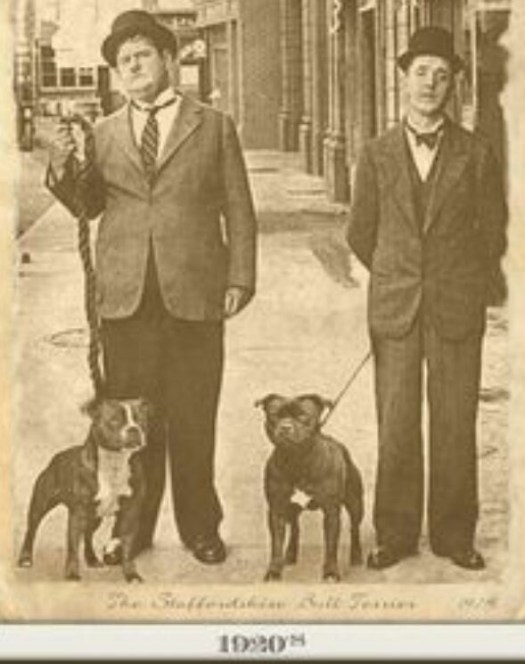
If you go back far enough, the Staffordshire Bull Terrier shares a common ancestry and history with the Amstaff, Pitbull, and Bull Terrier breeds, all of which were derived from the early bull and terrier crosses of the UK. All Sturdy breeds of dog which were developed over time to do an assortment of jobs. The history of our modern day Staffordshire Bull Terrier stretches back almost a century in time with very few pictures or writings to give us clues before the Industrial Revolution.
One thing we know for sure is that in the days of old the peasant working class of Europe would not have kept a dog around for a pet or merely as a companion. The only reason to keep a dog was if you had a job for it to do, and a dog had to earn its keep or else it wasn’t worth feeding. Hounds were kept by wealthy noblemen, but a peasant couldnt own a hound so they instead kept any number of different kinds of Terriers. Some of these terriers were purposefully bred to bulldog type dogs to create a blend of bull and terrier that could be used for many diverse purposes. A bull and terrier type dog could be kept by a working class man for many reasons.
Often a peasant farmer with a good bull and terrier would be called upon by wealthy aristocratic land owners to eradicate rats in their barns, to dispatch badgers who would dig holes in their fields thus causing a hazard to the landowners horses, as well as helping to exterminate a number of other vermin that would of caused trouble around the countryside in those days. A good bull and terrier could alert you to the presence of unwanted visitors around your home and property. A good bull and terrier could be put to work pulling carts. A good bull and terrier could keep a protective watchful eye over children playing in the yard. A good bull and terrier would be a helpful tool for any working class man. Often the vermin killed by the bull and terrier would help to feed the owners family and keep clothes on their backs.
The very best game bull and terriers were put to the test against Badgers in trials and competitions and became quite famous earning accolades for themselves and for their owners. A good bull and terrier killed quickly and efficiently. If they weren’t able to kill their adversary quickly, for instance, if they had cornered a badger underground in their burrow and didn’t have much room to work, they would grab hold of their foe determinedly, hanging on as long as was necessary with the goal of wearing out the badger until it could be dragged out from under the earth into the sunlight to be dispatched above ground. In these sorts of trials the bull and terrier would undoubtedly sustain all sorts of injury and damage without giving up, sometimes suffering so much damage at the hands of the badger that they died trying or had to be dug out by their owner because they wouldn’t let go of their foe. The qualities that made these bull and terriers famous in the badger trials were the same qualities that made them so great in the pit, fighting against all manner of beasts from bear to bull to even monkeys and lions. A bull and terrier who didn’t make quick work of its adversary could potentially take more damage while engaged in a longer battle, so the best bull and terriers worked quickly and efficiently to dispatch their quarry, but were also game enough to never quit and would keep fighting even unto death. The bull and terrier type dogs had very strong jaws, which once closed upon their adversary would be quite difficult to pry open. Couple that with a tendency to shake their adversary violently when caught, a lot of damage could be inflicted very quickly.
Bear baiting contests, Bull baiting contests, and contests featuring dog on dog combat were very common back in the day, and sporting events of this kind were organized at local fairs and celebrations with wide attendance by men, women, and children of all ages. This type of sport was both legal and extremely popular. Contests would be widely advertised, tickets sold, and winners names reported far and wide by newspapers and dog sporting magazines. Often these contests would earn the winning dogs owner a small purse of prize money, and in turn earned the bear, bull, or dog a reputation for its fighting prowess, much like a modern day Boxer or MMA fighter. Such is the history of the modern Staffordshire Bull Terrier as it has been passed down to us. A common working mans dog, a quick and effective hunting dog, and a renowned deep game fighting dog. Understanding the Stafford we’ve inherited from the past, let us all take the utmost of care not to breed out the important qualities that made a good bull and terrier what it was then and what it continues to be today.

Personality
Staffords have a zest for life and eat up new experiences with the zeal of a puppy. They love to be with people and they don’t particularly care what the activity is: watching TV, reading a book in the sun, walking, running, or going for a ride in the car. The Stafford just wants to be with the people he loves. Staffordshire Bull Terriers are best suited for active families. Despite their imposing look and tendency toward dog aggression, Staffords are actually very good with children. Toddlers are not recommended, but older kids who understand a dog’s boundaries will find that a Stafford will gladly accept the role of friend, playmate, and evening pillow during TV time.
Activity Requirements
Though Staffords are happy to lounge around all day if you let them, these dogs thrive on plenty of good running exercise every day to maintain their health and muscle tone. They enjoy walks, hikes, jogs, or simple games of catch in the backyard. Enrolling them in organized activities like agility, flyball, weight pull, Tug-o-war, etc. keeps their minds as sharp as their bodies.
Staffords are adaptable to just about any living situation be it apartment or estate, city or country. No matter what his living arrangements, a commitment should be made to properly exercise a Staffordshire Bull Terrier.
Trainability
Staffords can be a handful to train. They are stubborn and willful and though they love you to pieces, don’t particularly care about doing what they are told. Novice dog owners should attend some form of puppy training classes. Not so much for their pup, but so that they as the owner can learn how to train and control their new family addition. Experienced dog owners should be able to handle this breed just fine. Staffords need confident leadership, a bit of firmness (they can handle the criticism), and 100% consistency. Some trainers recommend letting your Stafford run for a bit before conducting training sessions to help calm his mind and keep him focused.
Behavioral Traits
Staffordshire Bull Terriers have very strong jaws and they love to chew, especially as puppies. It is essential to the life of your furniture, shoes, and pretty much everything they can find that you keep plenty of chew toys around to satisfy your Stafford’s urge to chew.
Dog Aggression and Prey Drive
Dog aggression is very common in adult Staffords. If they think another dog is challenging them, an adult Stafford will not hesitate to engage. Staffords love to fight, and once started will not quit. Socializing your puppy to understand canine manners can help, but it’s best to keep your Stafford on a leash at all times, avoid off leash dog parks, and at home his yard should be fenced. The leash and fence will also help keep your Stafford from taking off after birds, squirrels, rabbits and cats, which they love to chase and kill if given the chance.
 Firestone Staffords